
Sit the real IELTS before the real day.
Listening, Reading, Writing and Speaking on the computer-delivered exam screen, with real timing and real question types — and a band score the moment you finish, with every mark explained.
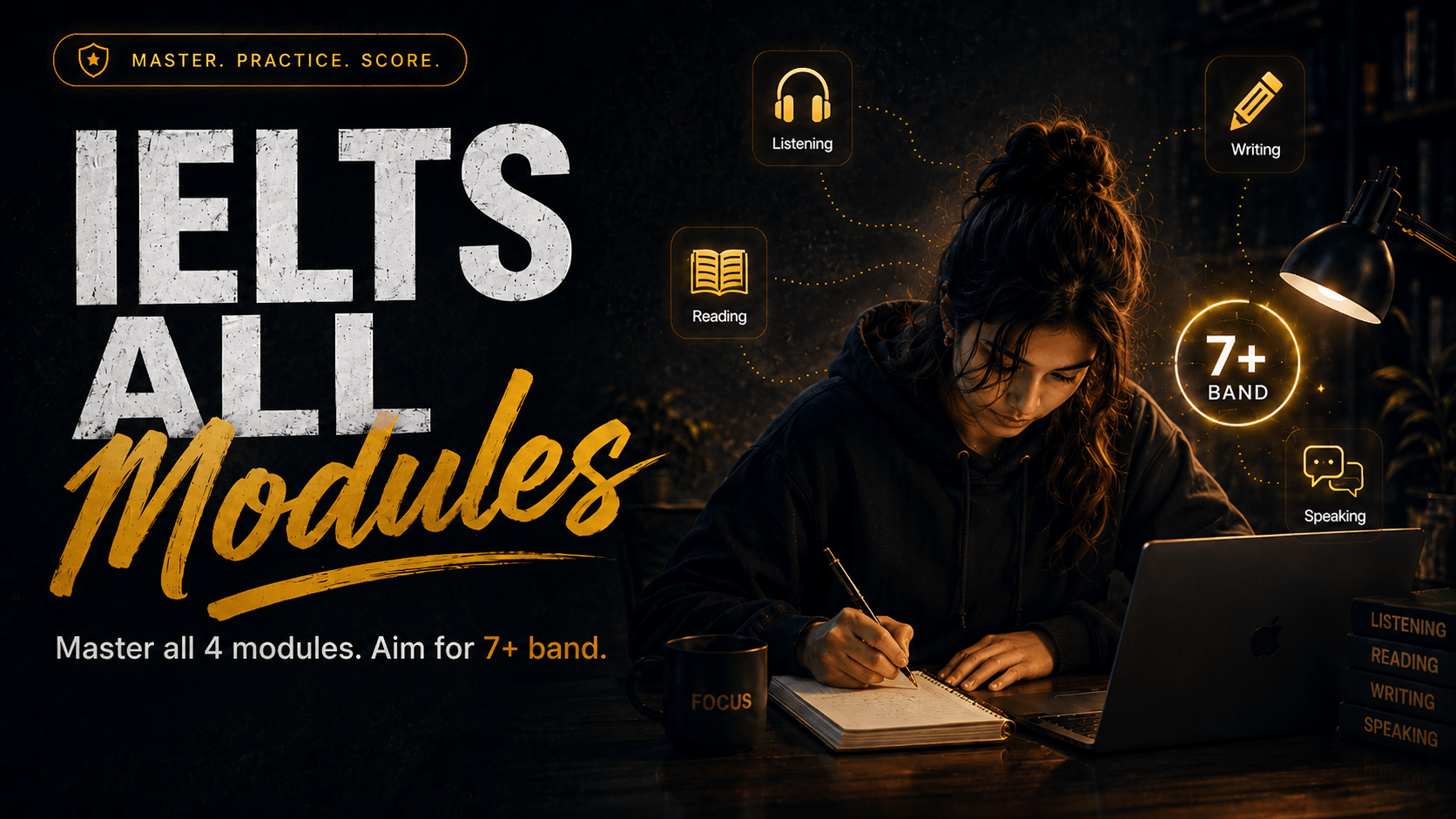
Three steps. Exactly like the test centre.
Pick a paper, or all four
One skill at a time, or the full mock in one sitting.
Sit it on the exam screen
Real timing, real question types, nothing to install.
Get your band
Every answer marked, every criterion explained.
Four papers. One band that tells the truth.
Practise the skill that is holding your score back, or sit the whole exam and see where you stand today.
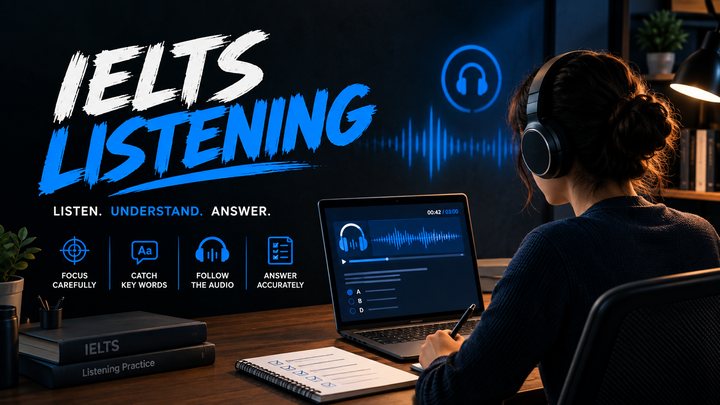 IELTS ListeningFour recordings, played once, exactly like the test day.7 tests40 questions20 + 2 minFirst paper freeStart
 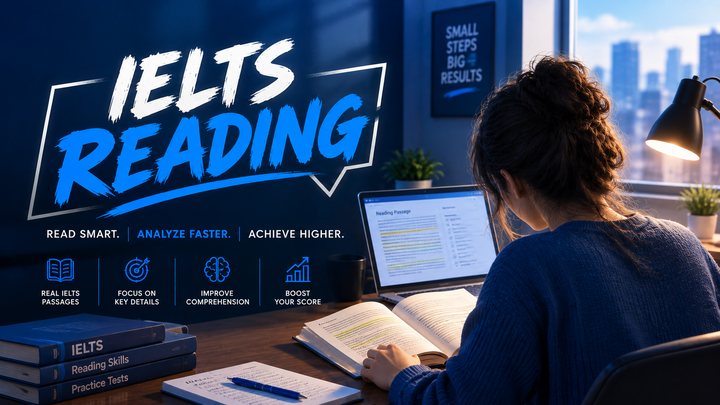 IELTS ReadingThree Academic passages with on-screen highlighting.10 tests40 questions60 minFirst paper freeStart
 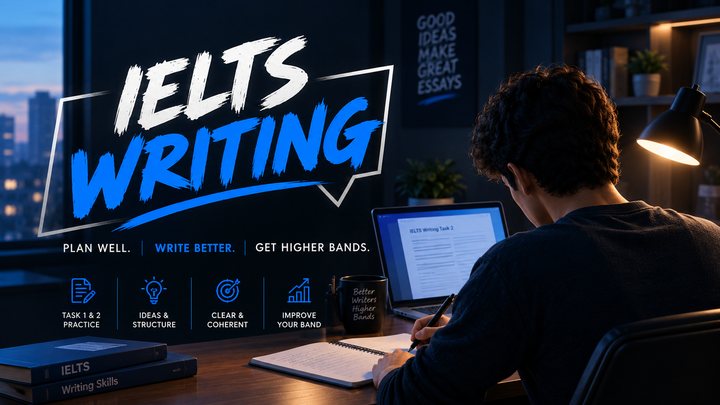 IELTS WritingTask 1 and Task 2, marked on the four official criteria.Task 1 + 2Academic60 minFirst paper freeStart
 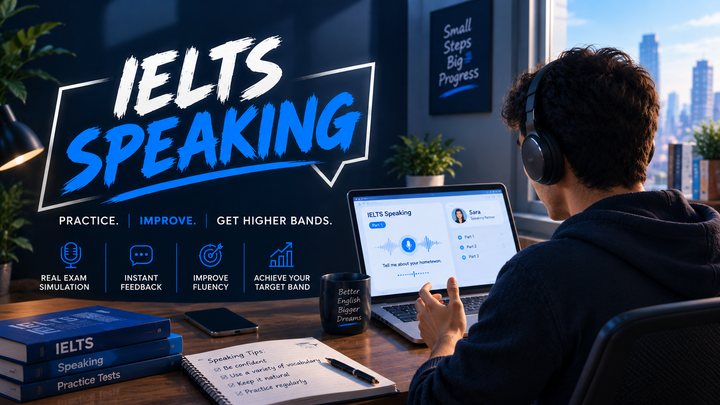 IELTS SpeakingA spoken interview with an examiner who listens and follows up.Parts 1–3Live examiner11–14 minFirst paper freeStart
 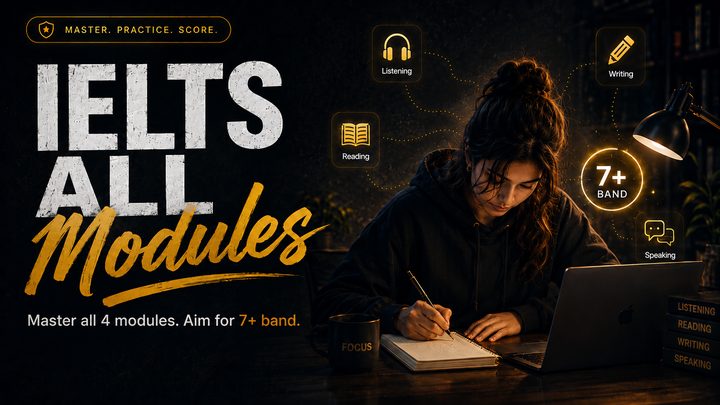 Full IELTS mock testAll four papersListening, Reading, Writing and Speaking back to back, then one overall band on a Test Report Form.
An examiner who listens. Not a list of questions.
You speak out loud, in an exam room, to an examiner who keeps real IELTS pace. Part 3 picks up the theme of your Part 2 cue card, and every follow-up comes from what you just said.
Short questions about you — home, work or study, everyday topics.
A cue card, one minute to prepare, then speak for up to two minutes.
Deeper questions on the Part 2 theme — reasons, examples, opinions.
 Part 3 · 07:42
Why do you think some people prefer to learn alone rather than in a group?
I think because it is more flexible, you can go at your own speed.
Is that true of every subject — or are some skills better learned with other people?
Not just a number. The reason for it.
A band on its own does not tell you what to practise. Every report shows where the marks went, using your own answers, and what would have moved you up half a band.
Listening & Reading
Your raw score, your band, and every question with your answer next to the correct one.
Writing
A band for each criterion, notes on your own script, vocabulary upgrades and a Band 9 model answer.
Speaking
Fluency, vocabulary, grammar and pronunciation — each band backed by the words you actually said.
The full mock
All four papers back to back and one overall band, laid out like a real Test Report Form.
Before you start.
Is this the real IELTS test format?
Yes. Every paper follows the computer-delivered IELTS Academic test: the same four papers, the same timings, the same question types and an exam-style screen. The questions are our own practice material written in the IELTS format, not leaked official papers.
How accurate is the band score?
Listening and Reading are marked against an answer key and converted to a band with the usual IELTS conversion, so they are close to what the real test gives. Writing and Speaking are marked by AI against the four public IELTS criteria — treat them as a strong estimate, not an official result.
Is it IELTS Academic or General Training?
Academic. Listening and Speaking are the same in both versions of the test; Reading and Writing follow the Academic module, including Writing Task 1 charts, maps and processes.
Will the Speaking examiner ask me the same questions again?
No. Each sitting is built from a bank of more than 80 topics and 60 cue cards and from your own history, so a question you have already answered does not come back.
What is in the full mock test?
Listening, Reading (60 minutes), Writing (60 minutes) and Speaking (11 to 14 minutes) run back to back, like the real test day, and end with one overall band on a Test Report Form.
Can I try it for free?
Yes. Every account can sit one paper of each IELTS module free, with no card. Full access is a one-time payment for 30 days — all four modules together, or one module on its own.
Find your band today. Not on results day.
One paper of each module is free. No card, nothing to install.
IELTS is a registered trademark of the British Council, IDP: IELTS Australia and Cambridge University Press & Assessment. TalkNative is an independent practice tool and is not affiliated with or endorsed by them. Bands shown here are practice estimates, not official results.