
 CzechČeštinaCzech · Čeština · AI speaking partner
Czech, said out loud, ř included.
Czech has a sound found in no other language, seven cases, and a capital where everyone speaks English until you need them not to. Learners who want to live in Prague rather than visit it learn to speak Czech, and they learn it by speaking.
Your AI partner talks with you in Czech, corrects the ending or the "ř" on screen, and keeps the conversation going at your pace.
 Čeština
Today's five phrases
- Můžete to zopakovat, prosím?Could you repeat that, please? Heard
- Nerozumím úplně.I don't quite understand. Heard
- Co doporučujete?What do you recommend?
Sara: That sounded natural. Say the third one once more, a little slower, and we move on.
Speakers
11 million
worldwide
Spoken in
Czechia and communities in Slovakia, Austria and the USA
Writing
Latin alphabet
For English speakers
Far from English
about 1,100 hours to working fluency
Exams
CCE
Why Czech is hard to speak
What stops learners talking, and what fixes it.
The ř
A rolled r with a buzz, in "Dvořák" and "řeka". It is learned by saying it back many times to a patient listener, which is what Word Mode is.
Seven cases and the little words
"Jdu do školy", "jsem ve škole": the ending and the preposition change together. Used daily, corrected daily.
Formal and informal
"Vy" to everyone you do not know, "ty" to friends, and a Czech will notice a slip. The scenes put you with officials and friends alike.
Who learns Czech, and why
Czech conversation practice for moving abroad, work and the exam.
Three reasons people come, and the part of TalkNative built for each. Pick yours; the practice follows it.
Settling in Prague
Renting a flat, the doctor, the school, the office that issues the papers: the conversations of the first months, rehearsed in Czech before the appointment, so you walk in knowing what they will ask.
Czech at work
Interviews, meetings and the small talk around them. The job-interview and business scenes run in Czech, and the daily coach stays in the workplace register when you ask, so the first day in Prague is not the first time you speak.
CCE speaking
The spoken part of CCE is a conversation with follow-ups, under time. Daily spoken practice in Czech with corrections on screen builds the fluency the examiner marks, and the scenes rehearse the situations the tasks are drawn from.
Ways to practise Czech
6 ways to practise Czech speaking online.
Every one of them is out loud, with an AI partner who answers, follows up and corrects you on screen.
 DailyBuild ConfidenceTen minutes a day with a coach who talks Czech with you and corrects you on screen without interrupting.
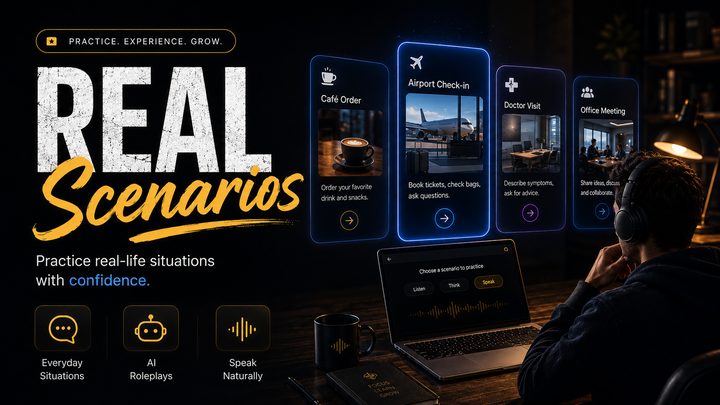 RoleplayReal ScenariosTwenty-three real-life scenes in Czech: order, check in, complain, interview, with a character who pushes back.
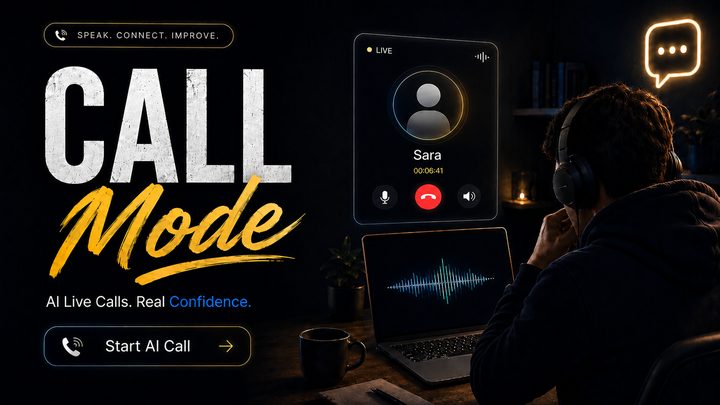 PhoneCall ModePhone calls in Czech with AI characters who pick up, talk back and remember your last call.
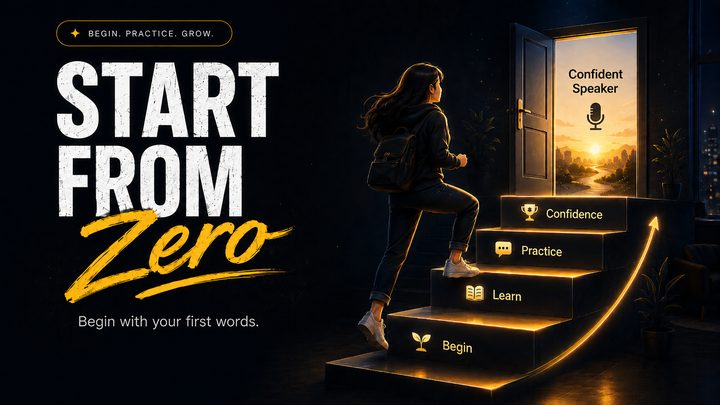 BeginnerStart from ZeroSixty short spoken lessons from your first hello, taught in the language you already speak.
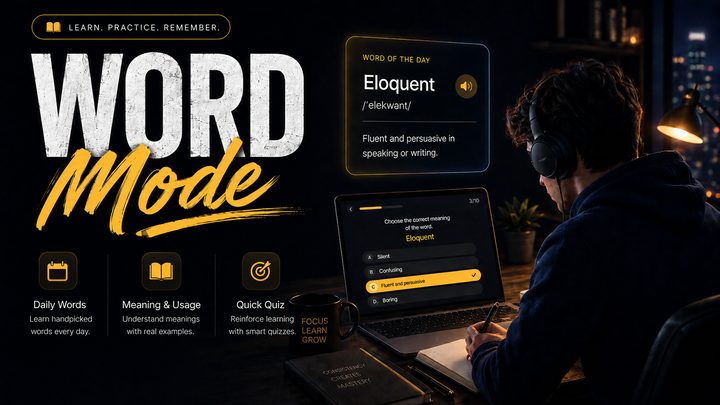 VocabularyWord ModeThree new Czech words a day, each said in a sentence of your own and corrected out loud.
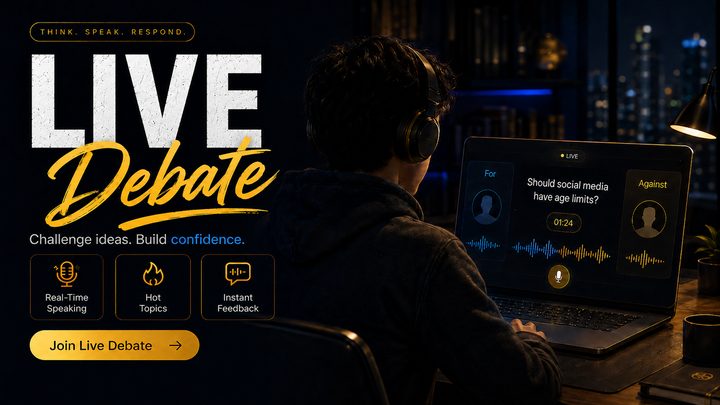 ArgueDebateArgue a motion in Czech against an AI rival and get judged on your arguments, not just your grammar.
A plan that fits in a day
How to practise speaking Czech every day.
Ten to fifteen minutes, out loud, in this order. Nothing to memorise first: you speak Czech from the first session and the corrections do the teaching.
- 1
Say your first Czech out loud, today
Week 1Start from Zero teaches sixty short spoken lessons in the language you already speak: greetings, numbers, the questions you will ask in Prague. Twelve minutes a day, said aloud and corrected, saved to your account.
Open Start from Zero - 2
Three Czech words a day, in your own sentences
Every dayWord Mode gives you three words, has you use each in a sentence about your life, and corrects what it heard out loud. That is how vocabulary becomes speech instead of a list.
Open Word Mode - 3
Talk with a coach who never interrupts
Ten minutes a dayBuild Confidence is a daily conversation in Czech about your week, your city, your opinion. Mistakes appear on screen with the natural version while the conversation goes on, and a Confidence Score shows the climb.
Open Build Confidence - 4
Rehearse the conversation you are afraid of
Before it happensReal World Scenarios put you in the restaurant, the interview, the clinic, the phone call, in Czech, with a character who has objectives of their own. Then a scene report shows what to say next time.
Open Real Scenarios
Scenes worth trying in Czech
Practise the conversation before it happens.
 Daily life4–6 minApartment ViewingOMOmar · Letting agentRenting in Prague: the questions to ask, in Czech.
 Health4–6 minDoctor VisitDADr. Anand · General practitionerSymptoms and instructions at the clinic.
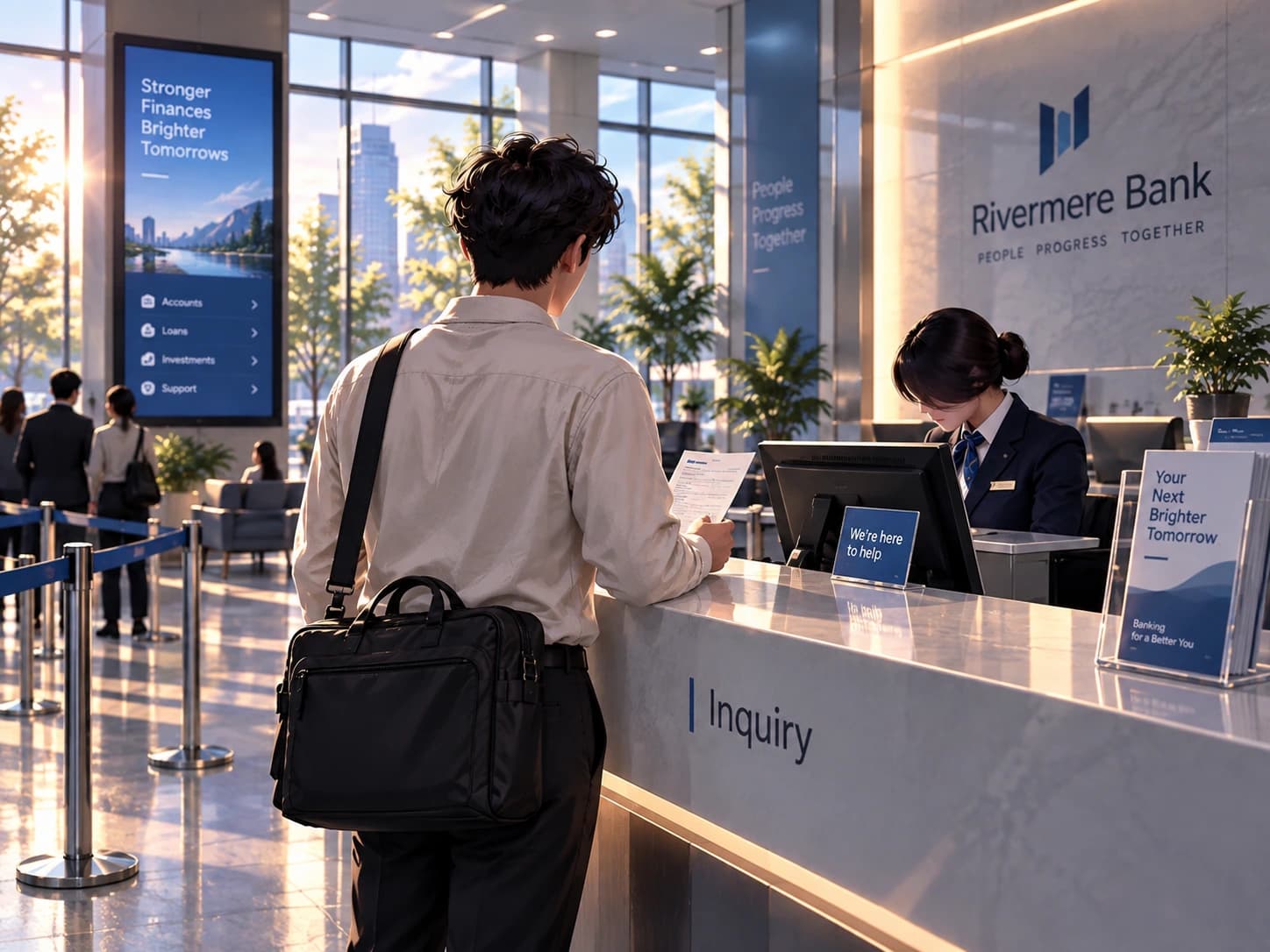 Money4–6 minBanking InquiryGRGrace · Bank officerAn unexpected charge, explained calmly.
 Daily life4–6 minAt a RestaurantLULuca · WaiterThe hospoda: ordering and the bill.
The Czech that rescues a conversation.
Say each one out loud now. Then say it to your AI partner, who will tell you how it sounded.
- 1
Můžete to zopakovat, prosím?
Could you repeat that, please?
- 2
Nerozumím úplně.
I don't quite understand.
- 3
Co doporučujete?
What do you recommend?
- 4
Kolik to stojí?
How much does it cost?
- 5
Chtěl bych si rezervovat stůl.
I'd like to book a table (a woman says chtěla).
Said them? Now say them to someone.
Your AI partner hears you and corrects what it heard.
Say them out loud
An honest timeline
How long does it take to speak Czech?
The US Foreign Service Institute puts Czech in its third of four groups for English speakers: far from English, about 1,100 class hours to professional fluency. The hours above are spoken-practice estimates on that scale; speakers of a related language get there faster, and ten minutes every day beats two hours on Sunday.
- A1≈ 90 hours
First exchanges
Greet, order, ask a price, say where you are from, in Czech, slowly and with mistakes nobody minds.
- A2≈ 200 hours
Getting by
Handle the shop, the taxi, the simple phone call and a chat about your day in Prague.
- B1≈ 440 hours
Holding a conversation
Tell a story, give an opinion, deal with a problem at the landlord's or the clinic, and follow native speakers who slow down a little.
- B2≈ 770 hours
Working in it
Interviews, meetings, arguments, jokes. The level most CCE candidates aim for.
Questions people ask
Before you start speaking Czech
Is Czech harder than Polish or Slovak?
They are close relatives with similar grammar; Czech has the ř and a strong difference between written and spoken forms. If you learn one, the others open up. Speaking daily is the way through any of them.
Can I practise formal Czech for work?
Yes. The job interview and business scenes use vy throughout, and the coach keeps to it if you ask.
Will the corrections be explained in my own language?
Yes. You choose the language you already speak at setup (English, Urdu, Hindi, Arabic and 50 more), and explanations in Start from Zero and Word Mode come in it while the practice stays in Czech.
Is Czech practice free?
Every module has a free taste with no card. Full access is a one-time payment for 30 days.
How can I practise Czech speaking online?
Talk, every day, with someone who answers in Czech and corrects you. On TalkNative that is an AI partner: a daily ten-minute coach (Build Confidence), roleplay scenes set in Prague and Brno (Real World Scenarios), phone calls (Call Mode), three words a day said in your own sentences (Word Mode) and, if you are starting, sixty spoken lessons in your own language (Start from Zero). Every module has a free taste with no card.
Is an AI partner good for Czech conversation practice?
For the thing most learners lack, yes: volume. A human tutor gives you an hour a week; an AI partner gives you ten minutes every day, listens to your voice, answers in natural Czech, follows up on what you said and shows corrections on screen without stopping you. It is not a replacement for Czech speakers in Prague; it is how you arrive there able to talk to them.
How long does it take to learn to speak Czech?
For an English speaker, Czech is far from English on the US Foreign Service Institute scale, about 1,100 class hours to professional fluency. Holding an everyday conversation (B1) comes much earlier, around 440 hours of spoken practice, and ten minutes a day gets there in a year or two; speakers of a related language are faster.
Does it help with the CCE speaking test?
The speaking part of CCE is a conversation with follow-up questions under time, which is exactly what the daily coach and the scenes train. TalkNative does not run a mock CCE itself (its full mock tests are for IELTS), but the fluency, the corrections on screen and the habit of answering in Czech without translating are what the examiner marks.
Your first Czech conversation takes ten minutes.
Out loud, corrected, in any of 57 languages. No card to start.
Read next
 English
 French
 Spanish
 German
 Italian
 Portuguese
 Dutch
 Russian
 Polish
 Ukrainian
 Greek
 Slovak
 Hungarian
 Romanian