
 DanishDanskDanish · Dansk · AI speaking partner
Danish, understood, and then spoken.
Danish is the language learners read easily and cannot hear. Letters vanish, vowels blur, and the "stød", a catch in the throat, separates words that look identical. Danes know this, and switch to English kindly, which helps nobody.
Your AI partner talks with you in Danish daily, at a pace that rises slowly, corrects the vowel and the stød on screen, and does not switch. For Prøve i Dansk, for the job, for the Christmas lunch.
 Dansk
Today's five phrases
- Kan du sige det igen?Can you say that again? Heard
- Jeg forstår det ikke helt.I don't quite understand. Heard
- Hvad anbefaler du?What do you recommend?
Sara: That sounded natural. Say the third one once more, a little slower, and we move on.
Speakers
6 million
worldwide
Spoken in
Denmark, Greenland and the Faroe Islands, with communities in Germany
Writing
Latin alphabet
For English speakers
Closest to English
about 600–750 hours to working fluency
Exams
Prøve i Dansk (PD1–PD3)
Why Danish is hard to speak
What stops learners talking, and what fixes it.
The sounds that disappear
"Det" is "de", "meget" is "mal", "hvad" is "va". Speaking daily with a patient listener is how the ear maps writing to sound.
The stød
"Hun" and "hund" differ by a glottal catch. Word Mode has you say the pairs back until the difference is yours.
Twenty-some vowels
More distinct vowel sounds than almost any language. The ear learns them by hearing itself corrected.
Who learns Danish, and why
Danish conversation practice for moving abroad, the exam and work.
Three reasons people come, and the part of TalkNative built for each. Pick yours; the practice follows it.
Settling in Copenhagen
Renting a flat, the doctor, the school, the office that issues the papers: the conversations of the first months, rehearsed in Danish before the appointment, so you walk in knowing what they will ask.
Prøve i Dansk (PD1–PD3) speaking
The spoken part of Prøve i Dansk (PD1–PD3) is a conversation with follow-ups, under time. Daily spoken practice in Danish with corrections on screen builds the fluency the examiner marks, and the scenes rehearse the situations the tasks are drawn from.
Danish at work
Interviews, meetings and the small talk around them. The job-interview and business scenes run in Danish, and the daily coach stays in the workplace register when you ask, so the first day in Copenhagen is not the first time you speak.
Ways to practise Danish
6 ways to practise Danish speaking online.
Every one of them is out loud, with an AI partner who answers, follows up and corrects you on screen.
 DailyBuild ConfidenceTen minutes a day with a coach who talks Danish with you and corrects you on screen without interrupting.
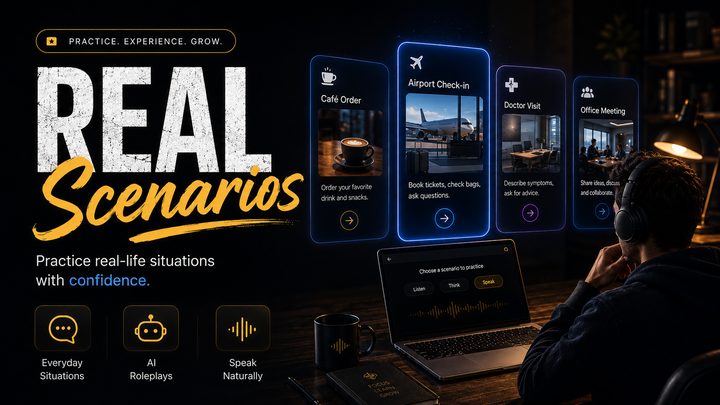 RoleplayReal ScenariosTwenty-three real-life scenes in Danish: order, check in, complain, interview, with a character who pushes back.
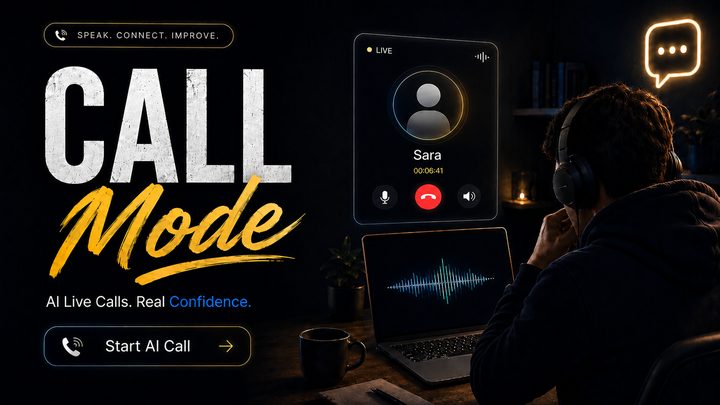 PhoneCall ModePhone calls in Danish with AI characters who pick up, talk back and remember your last call.
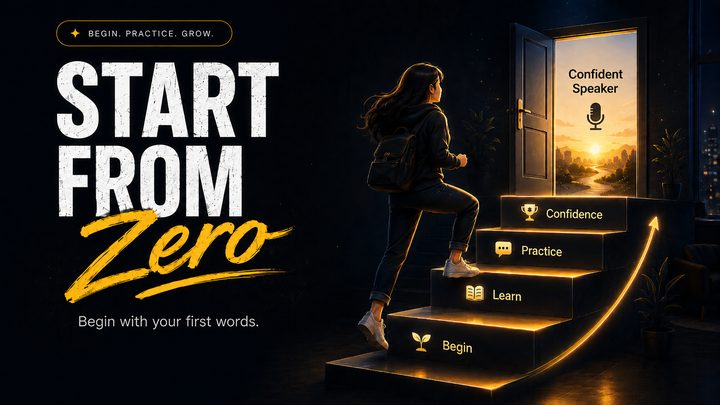 BeginnerStart from ZeroSixty short spoken lessons from your first hello, taught in the language you already speak.
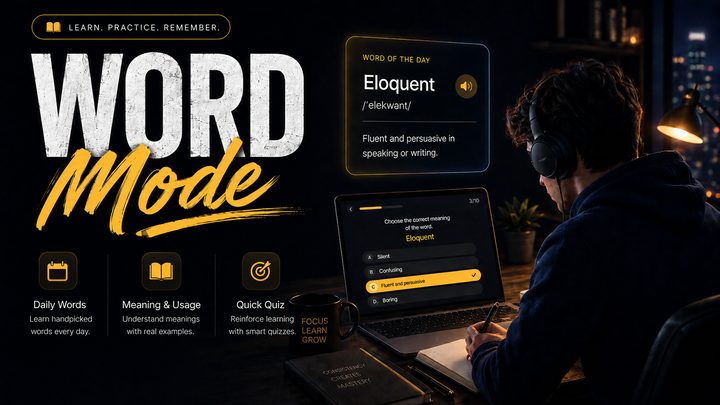 VocabularyWord ModeThree new Danish words a day, each said in a sentence of your own and corrected out loud.
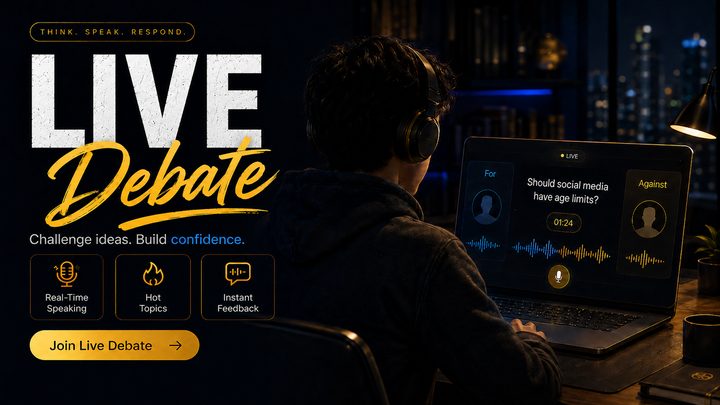 ArgueDebateArgue a motion in Danish against an AI rival and get judged on your arguments, not just your grammar.
A plan that fits in a day
How to practise speaking Danish every day.
Ten to fifteen minutes, out loud, in this order. Nothing to memorise first: you speak Danish from the first session and the corrections do the teaching.
- 1
Say your first Danish out loud, today
Week 1Start from Zero teaches sixty short spoken lessons in the language you already speak: greetings, numbers, the questions you will ask in Copenhagen. Twelve minutes a day, said aloud and corrected, saved to your account.
Open Start from Zero - 2
Three Danish words a day, in your own sentences
Every dayWord Mode gives you three words, has you use each in a sentence about your life, and corrects what it heard out loud. That is how vocabulary becomes speech instead of a list.
Open Word Mode - 3
Talk with a coach who never interrupts
Ten minutes a dayBuild Confidence is a daily conversation in Danish about your week, your city, your opinion. Mistakes appear on screen with the natural version while the conversation goes on, and a Confidence Score shows the climb.
Open Build Confidence - 4
Rehearse the conversation you are afraid of
Before it happensReal World Scenarios put you in the restaurant, the interview, the clinic, the phone call, in Danish, with a character who has objectives of their own. Then a scene report shows what to say next time.
Open Real Scenarios
Scenes worth trying in Danish
Practise the conversation before it happens.
 Work & career5–8 minJob InterviewDNDaniel · Hiring managerA jobsamtale in Danish.
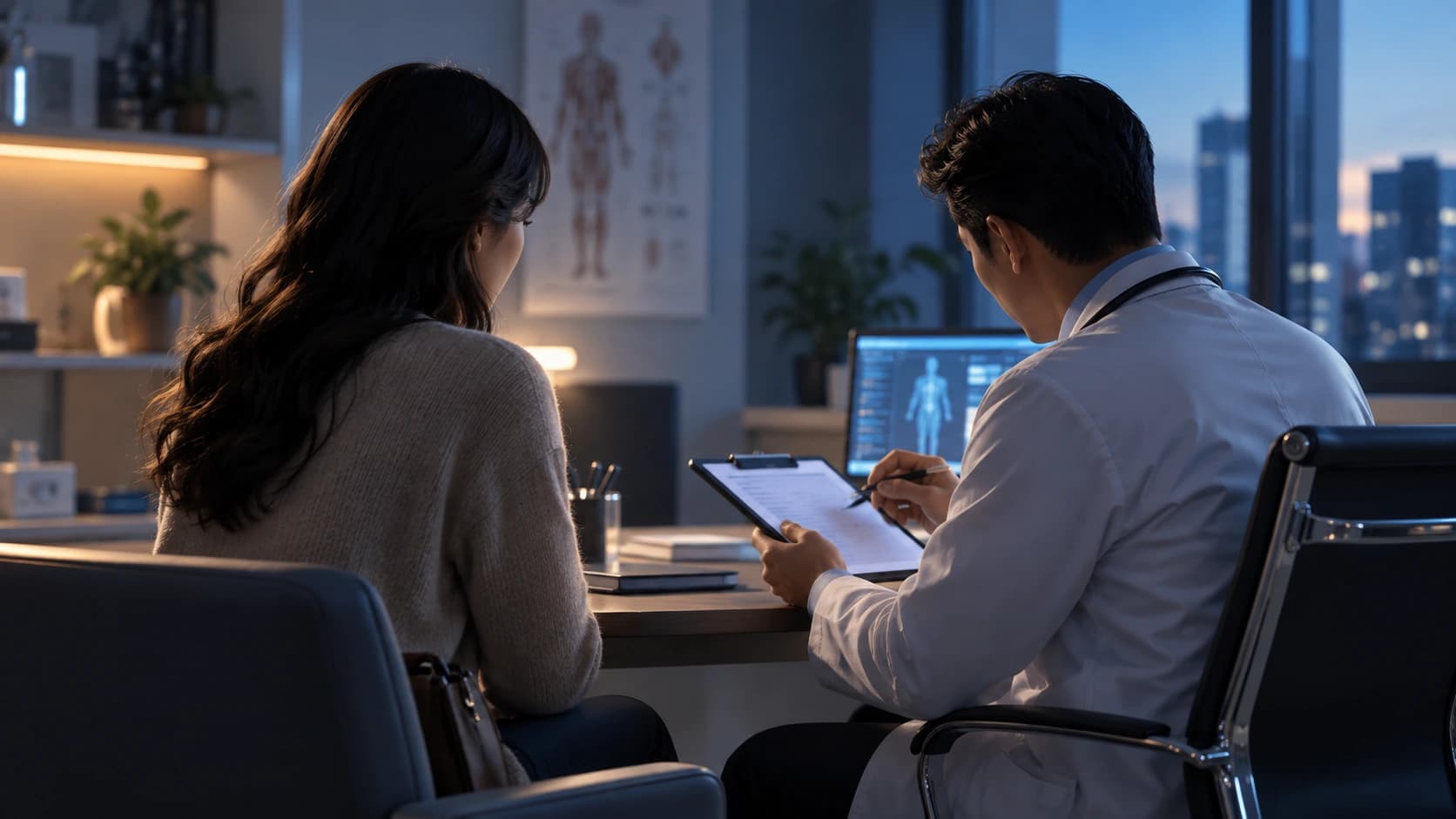 Health4–6 minDoctor VisitDADr. Anand · General practitionerThe læge: symptoms and instructions.
 Family3–5 minSchool Parent MeetingALMs. Alvarez · Class teacherThe skole-hjem-samtale with your child’s teacher.
 Daily life3–5 minGrocery ShoppingPRPriya · Shop assistantNetto or the market, in Danish.
The Danish that rescues a conversation.
Say each one out loud now. Then say it to your AI partner, who will tell you how it sounded.
- 1
Kan du sige det igen?
Can you say that again?
- 2
Jeg forstår det ikke helt.
I don't quite understand.
- 3
Hvad anbefaler du?
What do you recommend?
- 4
Hvad koster det?
How much does it cost?
- 5
Jeg vil gerne bestille et bord til to.
I'd like to book a table for two.
Said them? Now say them to someone.
Your AI partner hears you and corrects what it heard.
Say them out loud
An honest timeline
How long does it take to speak Danish?
The US Foreign Service Institute puts Danish in its first of four groups for English speakers: closest to English, about 600–750 class hours to professional fluency. The hours above are spoken-practice estimates on that scale; speakers of a related language get there faster, and ten minutes every day beats two hours on Sunday.
- A1≈ 60 hours
First exchanges
Greet, order, ask a price, say where you are from, in Danish, slowly and with mistakes nobody minds.
- A2≈ 140 hours
Getting by
Handle the shop, the taxi, the simple phone call and a chat about your day in Copenhagen.
- B1≈ 300 hours
Holding a conversation
Tell a story, give an opinion, deal with a problem at the landlord's or the clinic, and follow native speakers who slow down a little.
- B2≈ 530 hours
Working in it
Interviews, meetings, arguments, jokes. The level most Prøve i Dansk (PD1–PD3) candidates aim for.
Questions people ask
Before you start speaking Danish
Does it help with Prøve i Dansk 1, 2 or 3?
For the oral part, daily conversation with corrections and the everyday scenes build what the examiner assesses. TalkNative does not run the official test.
Will the AI switch to English like people in Denmark do?
No. It stays in Danish unless you ask for a translation, and even then it comes back to Danish. That is the conversation you cannot get in the street.
Are the corrections explained in my own language?
Yes. You choose the language you already speak at setup (English, Urdu, Hindi, Arabic and 50 more), and explanations in Start from Zero and Word Mode come in it while the practice stays in Danish.
Is Danish practice free?
Every module has a free taste with no card. Full access is a one-time payment for 30 days.
How can I practise Danish speaking online?
Talk, every day, with someone who answers in Danish and corrects you. On TalkNative that is an AI partner: a daily ten-minute coach (Build Confidence), roleplay scenes set in Copenhagen and Aarhus (Real World Scenarios), phone calls (Call Mode), three words a day said in your own sentences (Word Mode) and, if you are starting, sixty spoken lessons in your own language (Start from Zero). Every module has a free taste with no card.
Is an AI partner good for Danish conversation practice?
For the thing most learners lack, yes: volume. A human tutor gives you an hour a week; an AI partner gives you ten minutes every day, listens to your voice, answers in natural Danish, follows up on what you said and shows corrections on screen without stopping you. It is not a replacement for Danish speakers in Copenhagen; it is how you arrive there able to talk to them.
How long does it take to learn to speak Danish?
For an English speaker, Danish is closest to English on the US Foreign Service Institute scale, about 750 class hours to professional fluency. Holding an everyday conversation (B1) comes much earlier, around 300 hours of spoken practice, and ten minutes a day gets there in a year or two; speakers of a related language are faster.
Does it help with the Prøve i Dansk (PD1–PD3) speaking test?
The speaking part of Prøve i Dansk (PD1–PD3) is a conversation with follow-up questions under time, which is exactly what the daily coach and the scenes train. TalkNative does not run a mock Prøve i Dansk (PD1–PD3) itself (its full mock tests are for IELTS), but the fluency, the corrections on screen and the habit of answering in Danish without translating are what the examiner marks.
Your first Danish conversation takes ten minutes.
Out loud, corrected, in any of 57 languages. No card to start.
Read next
Also practise · Nordic
 Swedish
 Norwegian
 Finnish
 Icelandic