
 TagalogTagalog · Tagalog · AI speaking partner
Tagalog beyond "salamat po".
Tagalog is learned by the children of Filipino families abroad who understand it and answer in English, by partners, and by people moving to Manila who find that English gets them only so far. The sounds are easy; the verb system is like nothing in Europe.
Your AI partner talks with you in Tagalog daily, in the Taglish people really speak if you want it, corrects the verb focus and the "po" on screen, and never laughs at an accent.
 Tagalog
Today's five phrases
- Paki-ulit po.Please repeat (polite). Heard
- Hindi ko po masyadong naintindihan.I didn't quite understand (polite). Heard
- Ano po ang maire-rekomenda ninyo?What would you recommend?
Sara: That sounded natural. Say the third one once more, a little slower, and we move on.
Speakers
80 million
worldwide
Spoken in
the Philippines and the Filipino diaspora in the USA, the Gulf, Canada and Hong Kong
Writing
Latin alphabet
For English speakers
Far from English
about 1,100 hours to working fluency
Used in
Manila · Cebu · Davao
Why Tagalog is hard to speak
What stops learners talking, and what fixes it.
The focus system
"Bumili ako ng mangga", "binili ko ang mangga": the verb changes depending on what the sentence is about. Rules fill chapters; reflexes come from corrected speech.
Po and opo
The respect particles that mark politeness to elders, and the pronouns "kayo" and "ikaw". The scenes put you with elders, officials and friends.
Aspect, not tense
"Kumain", "kumakain", "kakain": completed, ongoing, not yet started. A system learned by use.
Who learns Tagalog, and why
Tagalog conversation practice for the family language, family and work.
Three reasons people come, and the part of TalkNative built for each. Pick yours; the practice follows it.
The Tagalog you grew up hearing
You understand it and answer in English. A partner who never switches, who waits, and who corrects the ending or the sound you half-remember, is how the answers start coming in Tagalog.
Tagalog for family
The in-laws, the grandparents, the partner's friends in Manila: warm conversation where nobody will correct you out loud. Your AI partner does, quietly on screen, so the next visit goes better than the last.
Tagalog at work
Interviews, meetings and the small talk around them. The job-interview and business scenes run in Tagalog, and the daily coach stays in the workplace register when you ask, so the first day in Manila is not the first time you speak.
Ways to practise Tagalog
6 ways to practise Tagalog speaking online.
Every one of them is out loud, with an AI partner who answers, follows up and corrects you on screen.
 DailyBuild ConfidenceTen minutes a day with a coach who talks Tagalog with you and corrects you on screen without interrupting.
 RoleplayReal ScenariosTwenty-three real-life scenes in Tagalog: order, check in, complain, interview, with a character who pushes back.
 PhoneCall ModePhone calls in Tagalog with AI characters who pick up, talk back and remember your last call.
 BeginnerStart from ZeroSixty short spoken lessons from your first hello, taught in the language you already speak.
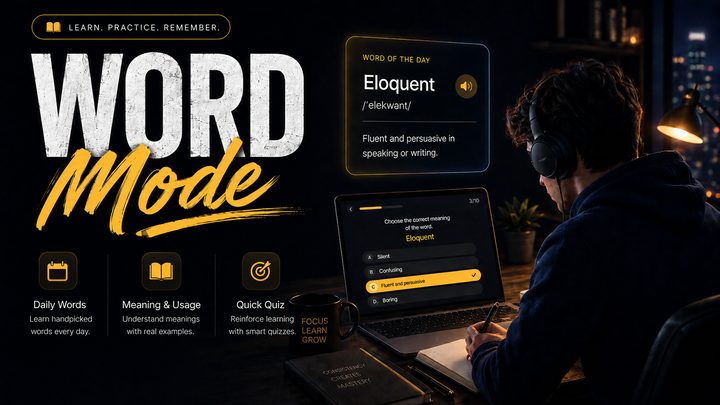 VocabularyWord ModeThree new Tagalog words a day, each said in a sentence of your own and corrected out loud.
 ArgueDebateArgue a motion in Tagalog against an AI rival and get judged on your arguments, not just your grammar.
A plan that fits in a day
How to practise speaking Tagalog every day.
Ten to fifteen minutes, out loud, in this order. Nothing to memorise first: you speak Tagalog from the first session and the corrections do the teaching.
- 1
Say your first Tagalog out loud, today
Week 1Start from Zero teaches sixty short spoken lessons in the language you already speak: greetings, numbers, the questions you will ask in Manila. Twelve minutes a day, said aloud and corrected, saved to your account.
Open Start from Zero - 2
Three Tagalog words a day, in your own sentences
Every dayWord Mode gives you three words, has you use each in a sentence about your life, and corrects what it heard out loud. That is how vocabulary becomes speech instead of a list.
Open Word Mode - 3
Talk with a coach who never interrupts
Ten minutes a dayBuild Confidence is a daily conversation in Tagalog about your week, your city, your opinion. Mistakes appear on screen with the natural version while the conversation goes on, and a Confidence Score shows the climb.
Open Build Confidence - 4
Rehearse the conversation you are afraid of
Before it happensReal World Scenarios put you in the restaurant, the interview, the clinic, the phone call, in Tagalog, with a character who has objectives of their own. Then a scene report shows what to say next time.
Open Real Scenarios
Scenes worth trying in Tagalog
Practise the conversation before it happens.
 Daily life3–5 minGrocery ShoppingPRPriya · Shop assistantThe palengke: quantities, prices, "tawad" (bargaining).
 Travel3–5 minTaxi RideSASamir · Taxi driverA jeepney or a Grab: directions and the fare.
 Family3–5 minSchool Parent MeetingALMs. Alvarez · Class teacherA teacher and your child, with po and opo.
 Social4–6 minDate NightNONoor · Your dateWarm conversation, where Tagalog and English mix naturally.
The Tagalog that rescues a conversation.
Say each one out loud now. Then say it to your AI partner, who will tell you how it sounded.
- 1
Paki-ulit po.
Please repeat (polite).
- 2
Hindi ko po masyadong naintindihan.
I didn't quite understand (polite).
- 3
Ano po ang maire-rekomenda ninyo?
What would you recommend?
- 4
Magkano po ito?
How much is this?
- 5
Salamat po, masarap ang pagkain.
Thank you, the food was delicious.
Said them? Now say them to someone.
Your AI partner hears you and corrects what it heard.
Say them out loud
An honest timeline
How long does it take to speak Tagalog?
The US Foreign Service Institute puts Tagalog in its third of four groups for English speakers: far from English, about 1,100 class hours to professional fluency. The hours above are spoken-practice estimates on that scale; speakers of a related language get there faster, and ten minutes every day beats two hours on Sunday.
- A1≈ 90 hours
First exchanges
Greet, order, ask a price, say where you are from, in Tagalog, slowly and with mistakes nobody minds.
- A2≈ 200 hours
Getting by
Handle the shop, the taxi, the simple phone call and a chat about your day in Manila.
- B1≈ 440 hours
Holding a conversation
Tell a story, give an opinion, deal with a problem at the landlord's or the clinic, and follow native speakers who slow down a little.
- B2≈ 770 hours
Working in it
Interviews, meetings, arguments, jokes. The level most employers aim for.
Questions people ask
Before you start speaking Tagalog
Tagalog or Filipino?
Filipino is the national language, standardised on Tagalog with borrowings. In speech they are the same thing, and that is what you practise here.
I understand Tagalog but answer in English. Will this help?
It is the commonest case. The vocabulary is there; it needs producing under no pressure, many times, with the verb forms corrected gently. After a few weeks the Tagalog answer comes first.
Are the corrections explained in my own language?
Yes. You choose the language you already speak at setup (English, Urdu, Hindi, Arabic and 50 more), and explanations in Start from Zero and Word Mode come in it while the practice stays in Tagalog.
Is Tagalog practice free?
Every module has a free taste with no card. Full access is a one-time payment for 30 days.
How can I practise Tagalog speaking online?
Talk, every day, with someone who answers in Tagalog and corrects you. On TalkNative that is an AI partner: a daily ten-minute coach (Build Confidence), roleplay scenes set in Manila and Cebu (Real World Scenarios), phone calls (Call Mode), three words a day said in your own sentences (Word Mode) and, if you are starting, sixty spoken lessons in your own language (Start from Zero). Every module has a free taste with no card.
Is an AI partner good for Tagalog conversation practice?
For the thing most learners lack, yes: volume. A human tutor gives you an hour a week; an AI partner gives you ten minutes every day, listens to your voice, answers in natural Tagalog, follows up on what you said and shows corrections on screen without stopping you. It is not a replacement for Tagalog speakers in Manila; it is how you arrive there able to talk to them.
How long does it take to learn to speak Tagalog?
For an English speaker, Tagalog is far from English on the US Foreign Service Institute scale, about 1,100 class hours to professional fluency. Holding an everyday conversation (B1) comes much earlier, around 440 hours of spoken practice, and ten minutes a day gets there in a year or two; speakers of a related language are faster.
Your first Tagalog conversation takes ten minutes.
Out loud, corrected, in any of 57 languages. No card to start.
Read next
 Chinese
 Japanese
 Korean
 Urdu
 Hindi
 Arabic
 Turkish
 Persian
 Bengali
 Thai
 Vietnamese
 Indonesian
 Malay