
 FrenchFrançaisFrench · Français · AI speaking partner
French that works outside the classroom.
French is the language where learners know the grammar and still cannot order a coffee. The written word and the spoken word are two different languages: letters go silent, words run together, and the "r" comes from somewhere in the throat.
TalkNative is where you close that distance by speaking every day: to an AI partner who replies in natural French, slows down when you ask, and shows the natural version of what you said without breaking the flow. It is also the preparation many learners use before a Canadian immigration interview or a French university year.
 Français
Today's five phrases
- Pourriez-vous répéter, s'il vous plaît ?Could you repeat, please? The conditional "pourriez" is the polite form that French speakers notice. Heard
- Je ne comprends pas très bien.I don't quite understand. Say it early; French speakers slow down for it. Heard
- Qu'est-ce que vous me conseillez ?What do you advise me? The question that gets you the good table and the good dish.
Sara: That sounded natural. Say the third one once more, a little slower, and we move on.
Speakers
310 million
worldwide
Spoken in
France, Canada, Belgium, Switzerland and 25 African countries
Writing
Latin alphabet
For English speakers
Closest to English
about 600–750 hours to working fluency
Exams
DELF · DALF · TEF Canada
Why French is hard to speak
What stops learners talking, and what fixes it.
Liaison and silent letters
"Vous avez" is "vou-za-vez", "ils ont" is "il-zon", and the final letters of "beaucoup" and "temps" are not said at all. Reading never teaches this; hearing yourself say it does.
Nasal vowels and the French r
"Vin", "vent", "bon" differ only in a nasal vowel English and Urdu do not have. The coach notes each one on screen the moment it slips, which is how the ear learns to hear the difference.
Gender and agreement, live
"Le table", "une grand maison": known on paper, dropped under pressure. Corrections that appear while you keep talking fix the habit faster than any exercise sheet.
Who learns French, and why
French conversation practice for moving abroad, the exam and work.
Three reasons people come, and the part of TalkNative built for each. Pick yours; the practice follows it.
Settling in Paris
Renting a flat, the doctor, the school, the office that issues the papers: the conversations of the first months, rehearsed in French before the appointment, so you walk in knowing what they will ask.
DELF speaking
The spoken part of DELF is a conversation with follow-ups, under time. Daily spoken practice in French with corrections on screen builds the fluency the examiner marks, and the scenes rehearse the situations the tasks are drawn from.
French at work
Interviews, meetings and the small talk around them. The job-interview and business scenes run in French, and the daily coach stays in the workplace register when you ask, so the first day in Paris is not the first time you speak.
Ways to practise French
6 ways to practise French speaking online.
Every one of them is out loud, with an AI partner who answers, follows up and corrects you on screen.
 DailyBuild ConfidenceTen minutes a day with a coach who talks French with you and corrects you on screen without interrupting.
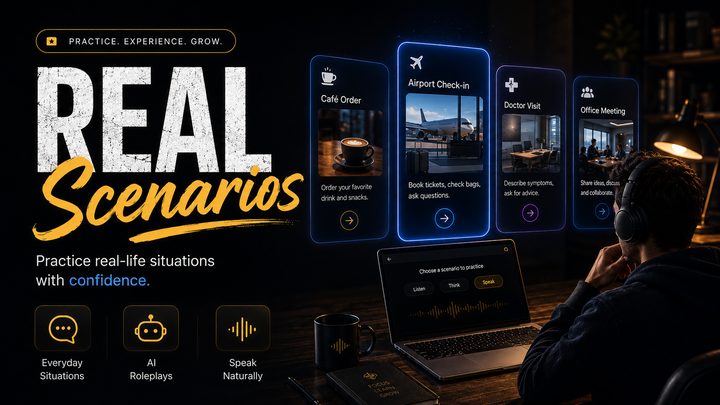 RoleplayReal ScenariosTwenty-three real-life scenes in French: order, check in, complain, interview, with a character who pushes back.
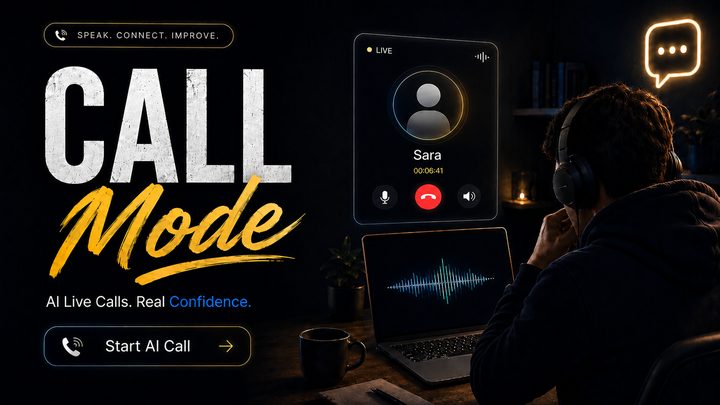 PhoneCall ModePhone calls in French with AI characters who pick up, talk back and remember your last call.
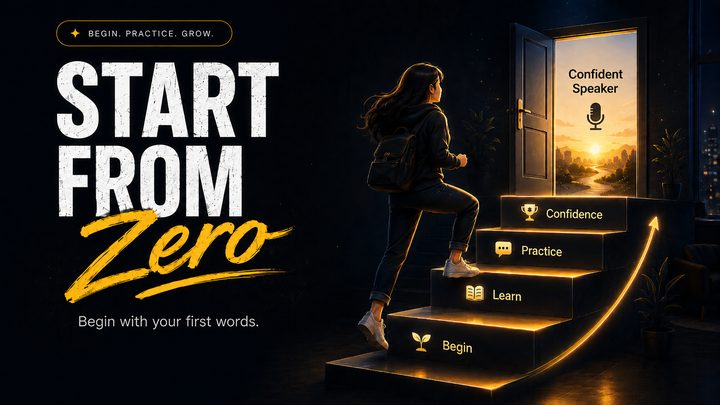 BeginnerStart from ZeroSixty short spoken lessons from your first hello, taught in the language you already speak.
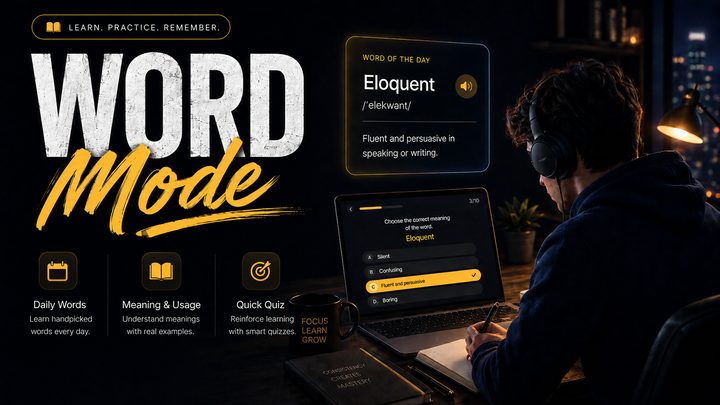 VocabularyWord ModeThree new French words a day, each said in a sentence of your own and corrected out loud.
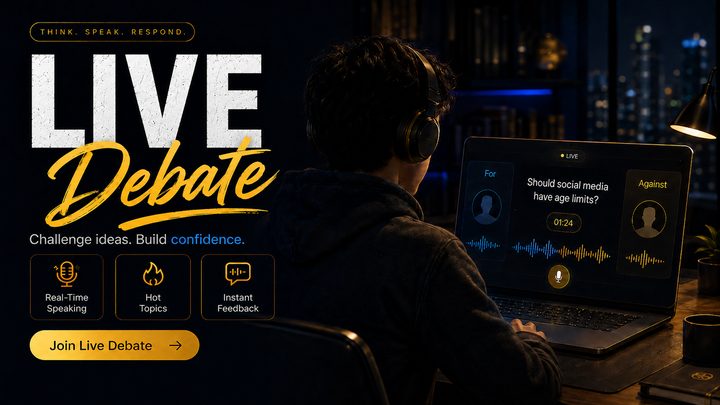 ArgueDebateArgue a motion in French against an AI rival and get judged on your arguments, not just your grammar.
A plan that fits in a day
How to practise speaking French every day.
Ten to fifteen minutes, out loud, in this order. Nothing to memorise first: you speak French from the first session and the corrections do the teaching.
- 1
Say your first French out loud, today
Week 1Start from Zero teaches sixty short spoken lessons in the language you already speak: greetings, numbers, the questions you will ask in Paris. Twelve minutes a day, said aloud and corrected, saved to your account.
Open Start from Zero - 2
Three French words a day, in your own sentences
Every dayWord Mode gives you three words, has you use each in a sentence about your life, and corrects what it heard out loud. That is how vocabulary becomes speech instead of a list.
Open Word Mode - 3
Talk with a coach who never interrupts
Ten minutes a dayBuild Confidence is a daily conversation in French about your week, your city, your opinion. Mistakes appear on screen with the natural version while the conversation goes on, and a Confidence Score shows the climb.
Open Build Confidence - 4
Rehearse the conversation you are afraid of
Before it happensReal World Scenarios put you in the restaurant, the interview, the clinic, the phone call, in French, with a character who has objectives of their own. Then a scene report shows what to say next time.
Open Real Scenarios
Scenes worth trying in French
Practise the conversation before it happens.
 Daily life4–6 minAt a RestaurantLULuca · WaiterOrder, ask what is good tonight and query the bill, in the country that invented the bistro.
 Daily life4–6 minApartment ViewingOMOmar · Letting agentA letting agent, a bright flat and questions you must ask before signing: the student-in-France conversation.
 Health3–5 minAt the PharmacyAMAmira · PharmacistA prescription, a cold and advice over the counter, where every word matters.
 Daily life2–4 minAsking for DirectionsTOTom · Local passer-byA fast answer from a passer-by, and the metro station you need to find.
The French that rescues a conversation.
Say each one out loud now. Then say it to your AI partner, who will tell you how it sounded.
- 1
Pourriez-vous répéter, s'il vous plaît ?
Could you repeat, please? The conditional "pourriez" is the polite form that French speakers notice.
- 2
Je ne comprends pas très bien.
I don't quite understand. Say it early; French speakers slow down for it.
- 3
Qu'est-ce que vous me conseillez ?
What do you advise me? The question that gets you the good table and the good dish.
- 4
Je voudrais prendre rendez-vous.
I'd like to make an appointment. Doctors, banks, the préfecture.
- 5
C'est combien ?
How much is it? Short, spoken, everyday.
Said them? Now say them to someone.
Your AI partner hears you and corrects what it heard.
Say them out loud
An honest timeline
How long does it take to speak French?
The US Foreign Service Institute puts French in its first of four groups for English speakers: closest to English, about 600–750 class hours to professional fluency. The hours above are spoken-practice estimates on that scale; speakers of a related language get there faster, and ten minutes every day beats two hours on Sunday.
- A1≈ 60 hours
First exchanges
Greet, order, ask a price, say where you are from, in French, slowly and with mistakes nobody minds.
- A2≈ 140 hours
Getting by
Handle the shop, the taxi, the simple phone call and a chat about your day in Paris.
- B1≈ 300 hours
Holding a conversation
Tell a story, give an opinion, deal with a problem at the landlord's or the clinic, and follow native speakers who slow down a little.
- B2≈ 530 hours
Working in it
Interviews, meetings, arguments, jokes. The level most DELF candidates aim for.
Questions people ask
Before you start speaking French
Is this useful for Canadian immigration or TEF preparation?
For the speaking part, yes: daily conversations with corrections build exactly the fluency those interviews test. TalkNative does not run the TEF or TCF exams themselves; use it as your speaking practice between official mock tests.
Can the AI slow down?
Yes. Ask it to speak more slowly, or to repeat, in French or in English, and it does. The coach also hands you the first few words when you go quiet.
Will my corrections be explained in English?
In English, Urdu, Arabic or whichever language you chose at setup. Beginners in Start from Zero are taught entirely in that language.
Is French practice free?
Every module has a free taste with no card. Full access is a one-time payment for 30 days.
How can I practise French speaking online?
Talk, every day, with someone who answers in French and corrects you. On TalkNative that is an AI partner: a daily ten-minute coach (Build Confidence), roleplay scenes set in Paris and Montréal (Real World Scenarios), phone calls (Call Mode), three words a day said in your own sentences (Word Mode) and, if you are starting, sixty spoken lessons in your own language (Start from Zero). Every module has a free taste with no card.
Is an AI partner good for French conversation practice?
For the thing most learners lack, yes: volume. A human tutor gives you an hour a week; an AI partner gives you ten minutes every day, listens to your voice, answers in natural French, follows up on what you said and shows corrections on screen without stopping you. It is not a replacement for French speakers in Paris; it is how you arrive there able to talk to them.
How long does it take to learn to speak French?
For an English speaker, French is closest to English on the US Foreign Service Institute scale, about 750 class hours to professional fluency. Holding an everyday conversation (B1) comes much earlier, around 300 hours of spoken practice, and ten minutes a day gets there in a year or two; speakers of a related language are faster.
Does it help with the DELF speaking test?
The speaking part of DELF is a conversation with follow-up questions under time, which is exactly what the daily coach and the scenes train. TalkNative does not run a mock DELF itself (its full mock tests are for IELTS), but the fluency, the corrections on screen and the habit of answering in French without translating are what the examiner marks.
Your first French conversation takes ten minutes.
Out loud, corrected, in any of 57 languages. No card to start.
Read next
 English
 Spanish
 German
 Italian
 Portuguese
 Dutch
 Russian
 Polish
 Ukrainian
 Greek
 Czech
 Slovak
 Hungarian
 Romanian