

The short answer
To answer a “describe a place” cue card, pick one real place you know well, say where it is, give three details someone could picture, add one moment that happened there, and finish with why it matters to you. You get one minute to plan, then talk until the examiner stops you at 2 minutes. Our samples below are about 200 words each. One well-known place can answer most place cards.
How do you answer a “describe a place” cue card?
The examiner gives you the card, a pencil and paper, and one minute to make notes. Then you talk until they stop you at 2 minutes. Use the minute to write four words, one for each part:
| Part | Say | About |
|---|---|---|
| Where | Name it and place it: “the reading room on the top floor of our old city library”. | 15 seconds |
| Picture | Three details someone could see or hear: high ceilings, green lamps, pages turning. | 30 seconds |
| Moment | One thing you do there, or one time you remember. | 30 seconds |
| Why | The “explain” point on the card, with a real reason. | 30–45 seconds |
Cover every bullet on the card, but you don’t have to take them in order. If you finish early, add another detail to the picture or the moment.
Describe a quiet place you like to go to
You should say: where it is, how often you go there, what you do there, and explain why you like it.
Sample answer (212 words, scored 7.0)
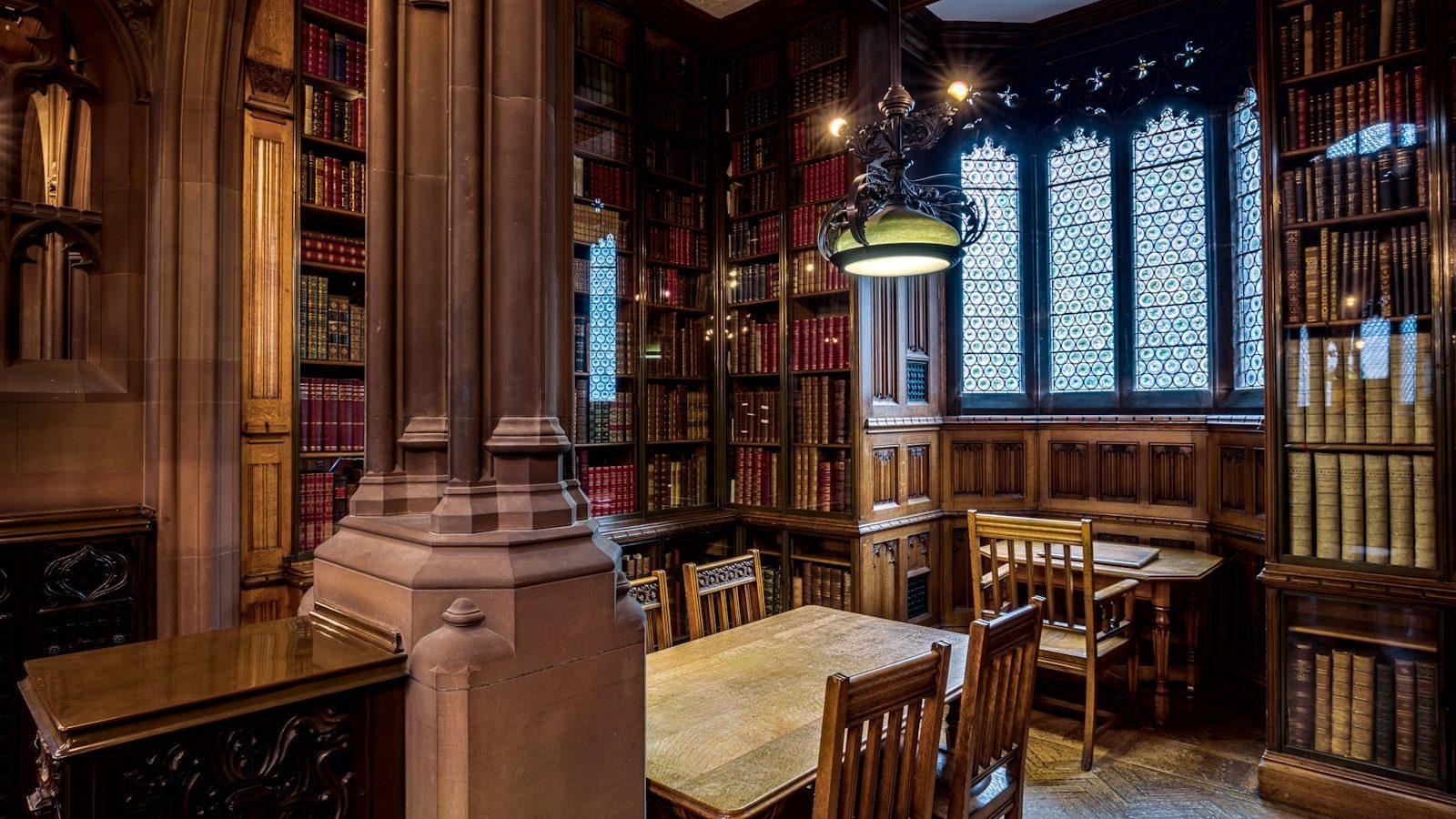
I’d like to talk about the reading room on the top floor of our old city library. It’s right in the centre of town, but once you climb the stairs, the traffic noise just disappears. I go there most Saturday mornings, and more often when I have exams coming up. What I usually do is pick a desk by the window, switch my phone to silent and work through whatever I’ve been putting off all week, whether that’s revision or just a novel I haven’t had time for. The room itself is quite old-fashioned. It has high ceilings, long wooden tables and those green reading lamps you see in films, and the only sound is pages turning and the occasional cough. The main reason I like it is that it’s the one place where I can actually concentrate. At home there’s always something going on, because I share a flat with three people and someone’s usually cooking or on a call. In the reading room, nobody expects anything from me for a few hours. I suppose it’s also become a bit of a ritual: I walk in, sit down, and my brain seems to know it’s time to focus. When I come out, I usually feel calmer than when I went in.
The picture (ceilings, tables, lamps, sounds) is what lifts it above a list of facts.
Describe a city you have visited
You should say: where it is, when you went there, what you did there, and explain why you liked it.
Sample answer (203 words, scored 7.0)
The city I’d like to describe is Istanbul, which I visited with two friends a couple of years ago, during the spring holidays. It’s in the north-west of Turkey, and what makes it unusual is that it sits on two continents, with the Bosphorus running between Europe and Asia. We stayed for five days in an old neighbourhood near the water. Most mornings we just wandered: we went to the Grand Bazaar, which is a huge covered market where you can easily get lost for an hour, and we visited a couple of the famous mosques. One evening we took a cheap public ferry across to the Asian side, and that turned out to be the highlight of the trip, because we watched the sun go down over the water with a glass of tea for about twenty lira. I liked the city mainly because it felt alive at every hour. The streets were full of people, street sellers and cats, and there was always something to look at. It was also much friendlier than I expected. Whenever we looked lost, someone would stop and point us in the right direction, even with very little English. I’d go back tomorrow if I could.
The ferry is the “moment”. One small story is worth more than a list of sights.
Describe a place you would like to visit
You should say: where it is, how you know about it, what you would do there, and explain why you would like to visit this place.
Sample answer (208 words, scored 7.0)
A place I’ve wanted to visit for a long time is Hokkaido, the most northern island of Japan. I first heard about it from a documentary about winter festivals, and I remember one scene where the whole city of Sapporo was filled with enormous ice sculptures lit up at night. Since then I’ve read a few travel blogs, and one of my colleagues went last year and came back with hundreds of photos, which only made me more determined. If I went, I’d try to go in February for the snow festival. I’d spend a few days in Sapporo, then take the train out to the countryside, because I’d love to stay in a traditional inn with a hot spring and just sit outside in the warm water while it’s snowing. I’d also like to try the local seafood, which everyone says is the best in the country. The main reason I want to go is that it would be completely different from where I grew up. I live somewhere hot, and I’ve only seen proper snow once or twice, so the idea of a place built around winter really appeals to me. I’m actually saving for it now, so hopefully in a year or two it’ll happen.
A future place needs “would”: I’d spend, I’d love to, I’d also like to.
Can one place answer many cue cards?
Yes. Prepare two or three places in detail, and change only the opening line and the “why”. The library above fits all of these:
| Cue card | Open with | Make the “why” about |
|---|---|---|
| A quiet place | “The reading room at our old library…” | Being able to concentrate |
| A place where you study, read or write | “Whenever I need to study, I go to…” | The routine that gets you working |
| An interesting or old building | “One building I like in my city is our old library…” | How old it is and what it looks like |
| A place you go to relax | “It might sound strange, but I relax at the library…” | Getting away from a busy home |
| A noisy place (use the contrast) | “My flat is the noisiest place I know…” | Why you escape to the library |
The same trick works for a city (a city you visited, a city you’d like to live in, a place with lots of people) and a natural place (a park, a beach, the countryside, a place with lots of trees).
What does a band 5 answer sound like next to a band 7?
We wrote a weak answer to the same quiet-place card and graded both with the marking instructions our IELTS Speaking mock test uses, on 28 November 2026. It was graded from text, so pronunciation couldn’t really be judged.
Weak answer
5.0
126 words: “The quiet place I like is library. Library is in my city. It is very very quiet place…”
Sample above
7.0
212 words: the reading room, what it looks like and sounds like, and why it helps.
What the report said about the weak answer, word for word:
- “The vocabulary used was basic and repetitive; terms like ‘library’ and ‘quiet’ were heavily relied upon without much variety or idiomatic expression.”
- “Grammatical structures were simple with frequent errors, such as ‘in week’ instead of ‘per week,’ affecting clarity and complexity.”
At 126 words, it’s also short for two minutes. The fix is the method above: a picture and a moment fill the time without padding.
What words help you describe a place?
| For | Try |
|---|---|
| Where | right in the centre of, on the outskirts of, a short walk from, tucked away behind |
| Looks | old-fashioned, spacious, cramped, high ceilings, lined with trees, overlooking the river |
| Sounds | peaceful, buzzing, the only sound is…, the noise just disappears |
| Feeling | it feels alive, it calms me down, I lose track of time, it’s become a ritual |
| How often | most Saturday mornings, whenever I get the chance, once in a while |
What Part 3 questions follow a place cue card?
Part 3 moves from your place to places in general. These are from the bank our AI examiner uses:
- Why is it hard to find quiet places in cities?
- Should cities do more to control noise?
- What are the advantages and disadvantages of living in a big city?
- Do tourists see a different side of a city from the people who live there?
- How can cities be made better places to live?
Give an opinion, a reason and an example, about three or four sentences. See more in our IELTS Speaking topics.
Common questions
Can I talk about a place I haven’t been to?
For “a place you’d like to visit”, yes. For the others, a real place is easier: you have true details to describe.
Can I change the facts a little?
Yes. You’re marked on your English, not on whether the story is true.
What if I run out of things to say?
Go back to the picture: one more thing you can see, hear or do there.
Should I memorise these answers?
No. Memorised answers tend to sound recited, and the card you get may differ. Learn your four notes and say it differently each time.
How do I practise speaking for 2 minutes?
Time yourself on your phone, or sit a mock test. Free tools are compared in free IELTS Speaking practice with AI.
How this was made: researched and drafted with AI from the IELTS pages linked here. All four answers were written by us, then graded by AI with our mock test’s marking instructions. An AI band is a guide, not an official IELTS score.
Sources
About the author
Mike is an AI Engineer at TalkNative and writes its guides to speaking practice and interview preparation.